 Snout
How do I keep track of different medications for several pets?
Give every pet its own schedule, its own labelled storage and its own line in the log, and give medicines one pet at a time. Log each dose with the pet's name and who gave it, and share that log with everyone in the house. If a pet may have taken another pet's medicine, call your vet.
Published · Last reviewed
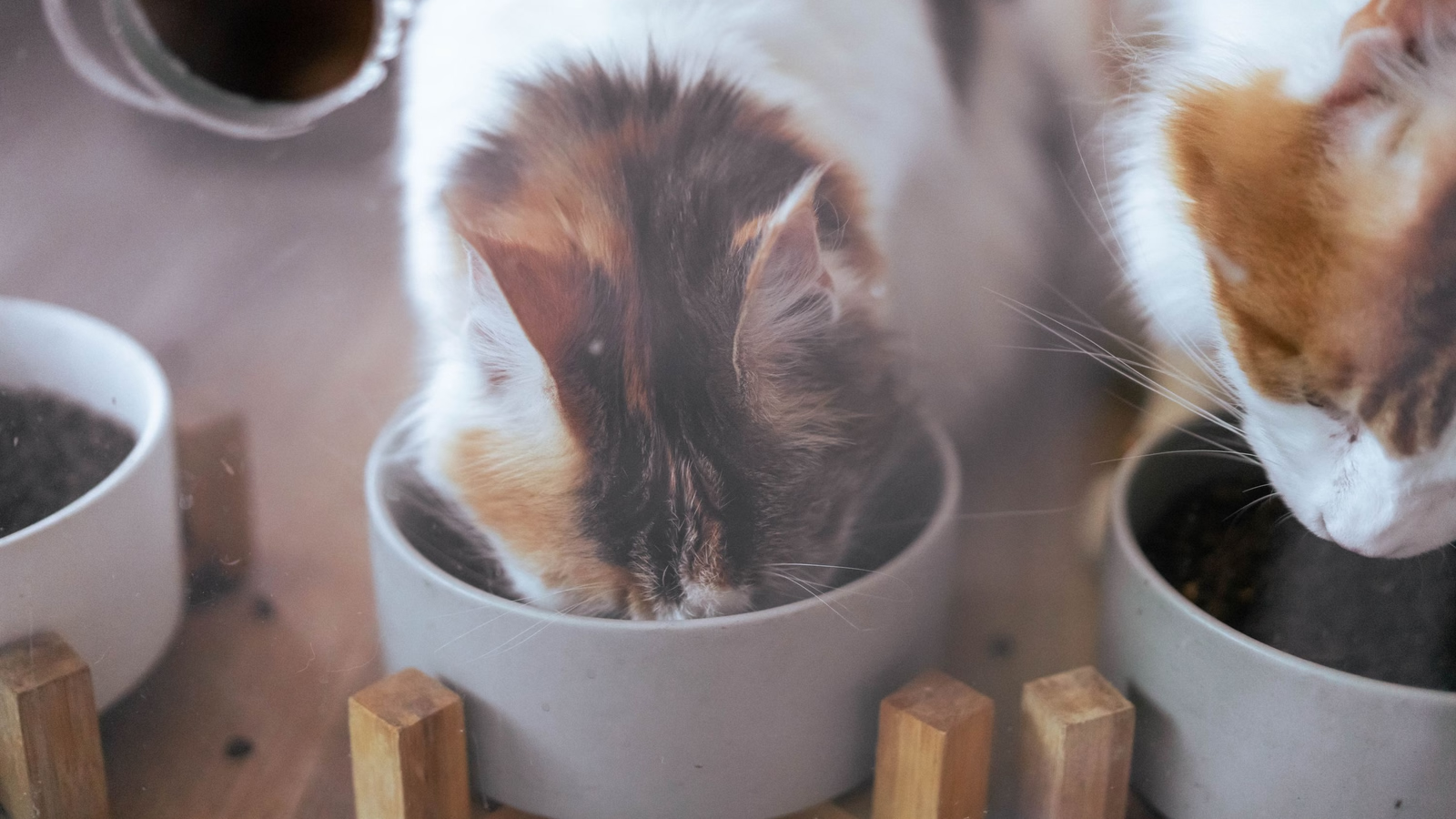
Two cats on different pills, a dog with a joint supplement, a monthly flea treatment for everyone: each part is easy, but together it’s where mix-ups happen. A pill given to the wrong pet, a second dose because two people each thought the other forgot, a flea product meant for the dog used on the cat. Your vet decides what each pet takes. This guide is about keeping every dose with the right animal.
Most of what follows is practical tips (no veterinary source), labelled as such. The safety rules come from the FDA and the EPA.
Keep each pet’s medicines apart
The FDA’s storage advice fits a multi-pet home exactly: “To prevent mix-ups, store medications for each person and each pet in your household separately.” It also says to keep pet medicines in their original labelled containers, in a secure place, away from people medicines.
Practical tips (no veterinary source):
- Give each pet its own box, basket or shelf, with the pet’s name on it.
- Use a different coloured sticker per pet on every container.
- If two pets take the same medicine, keep two separate, labelled supplies. Each prescription is written for one animal.
One schedule per pet
Write a separate schedule for each pet: medicine, time, with food or not, and what to do if a dose is missed. Ask your vet those questions for every prescription, and tell them about the other pets’ medicines too if anything could be shared or swapped by accident.
Example layout only. Your vet's plan sets the medicines and the times.
| Medicine | Breakfast | Evening walk | Bedtime |
|---|---|---|---|
| Pet 1Medicine Awith food | Dose box | Nothing | Dose box |
| Pet 2Medicine B | Dose box | Nothing | Nothing |
| Pet 2Eye drops | Nothing | Dose box | Nothing |
Tick each box when the dose is given, and add your initials.
Practical tips (no veterinary source):
- Give medicines one pet at a time. Stagger pets by a few minutes so you only ever hold one pet’s pills.
- Give each pet its dose in its own spot, and watch until the pill is swallowed.
- If a pill is hidden in food, feed that pet apart from the others, wait until the bowl is empty and pick it up.

What to record
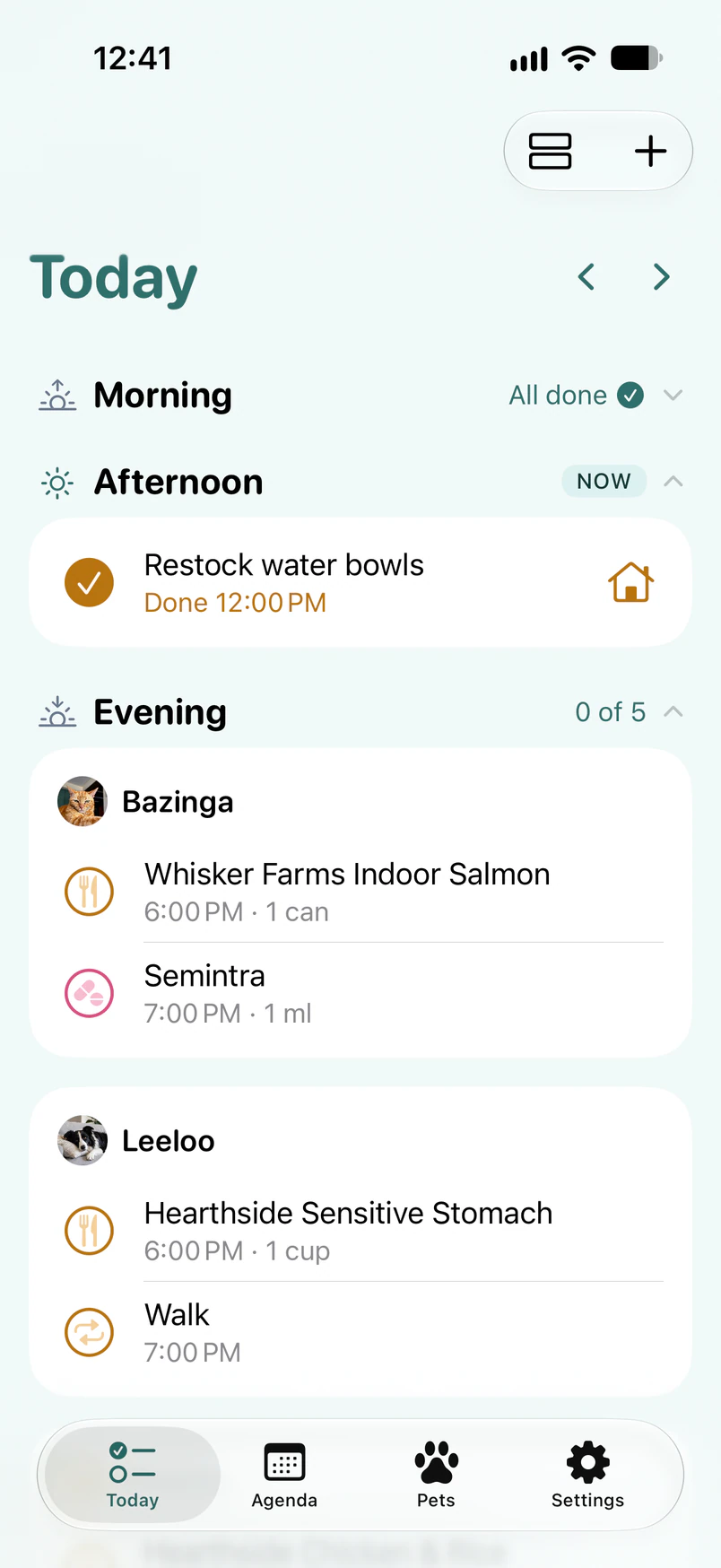
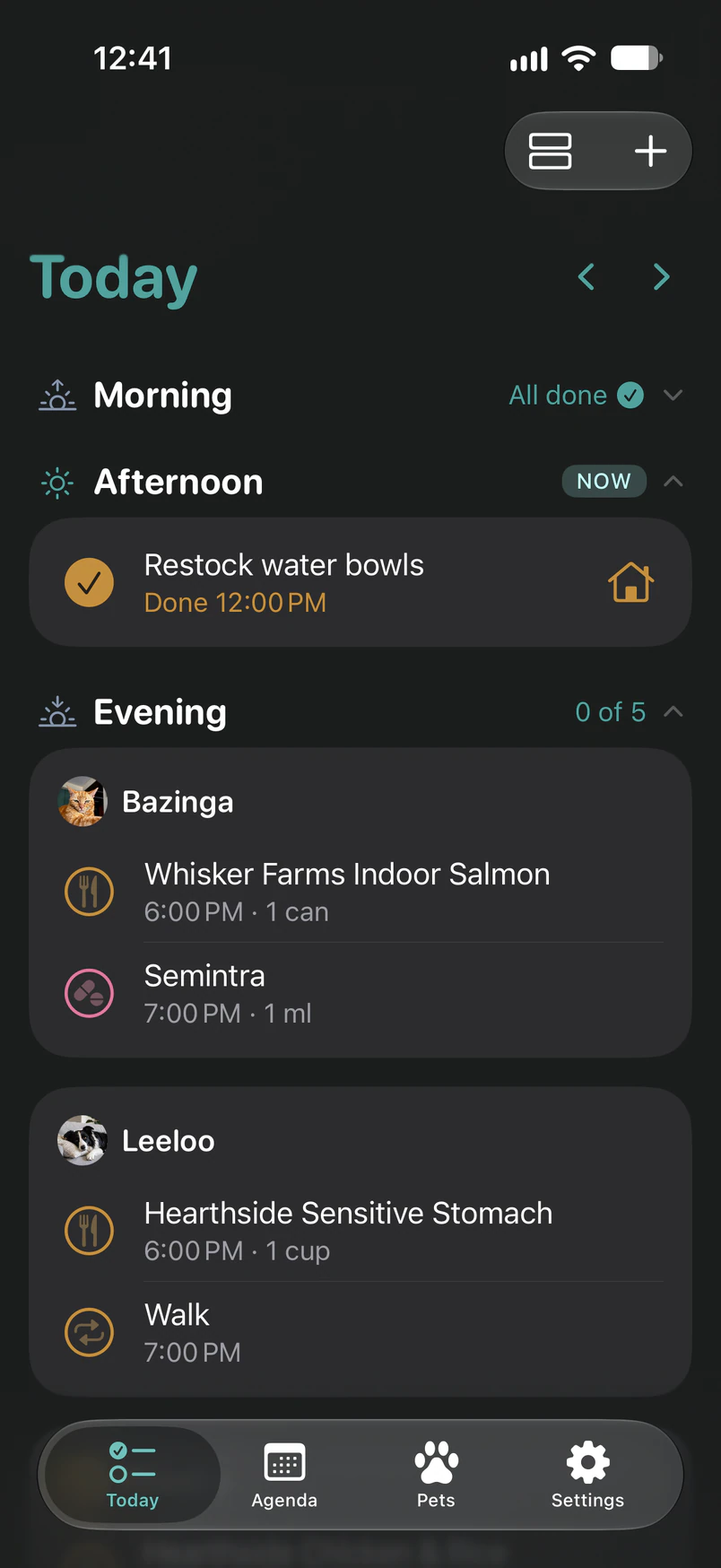
Every log line needs the pet’s name, the medicine, the time and who gave it. Note anything unusual too: a refused pill, a vomited dose, a pet that went near another’s bowl. The free medication log has a column for each, and works for several pets on one page.
Sharing the job with your household
Double doses happen when two people help without a shared record. Practical tips (no veterinary source):
- Keep one log for the whole household, and fill it in the moment a dose is given.
- Check the log before giving anything, every time.
- Agree who covers which slot, and say so when that changes.
- Put the schedule where the medicines are, so a visitor or relative can follow it.
Flea, tick and worm treatments for everyone
Shared products cause their own mix-ups. The FDA and the EPA agree on the main rules:
- Right species. The FDA says: “If the product is for use on dogs, don’t use it on cats.” The EPA warns that “some pesticides are more toxic to one species than another.”
- Right weight. The EPA says to apply “only the amount indicated for the size/weight of the animal being treated”, and the FDA says to check the pet is at least the minimum weight and the right life stage on the label.
- Keep them apart. The FDA advises keeping a treated animal “separated from the other(s) until the product dries”, so other pets can’t groom or rub against it.
Read each label for each pet, and log the date each pet was treated.
Questions owners ask
One of my pets ate the other's pill. What should I do?
Call your vet. The FDA's advice for any accidental extra dose is to call your veterinarian right away. Have the medicine box ready and note what was eaten, roughly how much and when, so they can decide quickly.
Can my pets share the same medicine if they have the same problem?
Only if your vet prescribes it for each of them. Each prescription is written for one animal. Keep each pet's supply in its own labelled container, as the FDA recommends, even when two pets take the same drug.
Can I use my dog's flea treatment on my cat?
No. The FDA says: "If the product is for use on dogs, don't use it on cats." The EPA adds that some pesticides are more toxic to one species than the other. Buy a product labelled for each species and each pet's weight.
How do I stop my pets eating each other's food when one has pills hidden in it?
This is a practical tip, not veterinary advice: feed that pet in a separate room or behind a closed door, stay until the bowl is empty, then pick it up. Pets on a prescription diet need the same arrangement.
My partner and I both give medicines. How do I avoid double doses?
Use one shared log and fill it in the moment a dose is given, with the pet's name and your initials. Agree who covers which time slot. Before giving anything, check the log first.
Should I give all my pets their medicines at the same time?
Follow each pet's prescription for timing. Within that, a practical tip is to stagger pets by a few minutes so you only ever have one pet's medicine in your hand.
This is general information, not veterinary advice. Ask your vet about your own pet.