 Snout
What medication instructions should I leave for my pet sitter?
Write one clear card per medicine: what it is and looks like, how and when to give it, with food or not, and where it's kept. Show the sitter how to give it before you leave, and get your vet's answer in writing for missed, vomited or refused doses. Leave your vet's details, an emergency clinic and a note of what care you allow if you can't be reached.
Published · Last reviewed

Handing your pet’s medicines to someone else is one of the most stressful parts of going away. A sitter can be perfectly capable and still give a dose twice, skip one, or not know what to do when a pill comes back up. Clear written instructions fix most of that. Your vet decides the medicines and the answers to clinical questions. Your job is to get those answers onto paper before you leave.
Most of this guide is practical tips (no veterinary source), labelled as such. Clinical questions are left to your vet.
What to write down for each medicine
The AKC’s sitter checklist says to “write out instructions for administration and where it’s kept, out of your dog’s reach.” Zoetis puts it plainly: “Be specific about dosage, timing, and how they should work with your pet.”
Practical tips (no veterinary source): one card per medicine, with
- the name and strength, plus a photo of the tablet, liquid or pen,
- what it’s for, in one line,
- how to give it (whole, in food, by syringe, on the skin),
- the times, as your vet prescribed,
- with food or on an empty stomach,
- where it’s stored, and whether it lives in the fridge,
- what to do if a dose is missed, vomited or refused (see below).
Copy the times and amounts straight from the label or your vet’s instructions. The free pet-sitter sheet has a section for each medicine alongside feeding, walks and contacts.
Practise before you leave
A written card is not the same as having done it. The AKC suggests you “demonstrate to your pet sitter how to dose your pet”, and Zoetis says to “walk your pet sitter through the process.”
Practical tips (no veterinary source):
- Have the sitter give a real dose while you watch, ideally a day or two before you go.
- Show them how your pet behaves when they don’t want the pill, and what works.
- Walk them through the log: which line to fill in, and that it’s done right after each dose.
Supplies, vets and permission to treat
Zoetis’ advice is to “Post a list of at least three emergency contact numbers” and to make sure supplies are stocked before you leave. The AKC says to leave “your veterinarian’s name, phone number, and location.”
For treatment, the AKC suggests explaining “the type of veterinary care your dog can receive if you can’t be reached.” Zoetis recommends a written treatment authorisation form: “Leave it with your pet sitter and forward a copy to your veterinarian.”
Practical tips (no veterinary source):
- Count the medicine for the whole trip, plus a few spare days.
- Check no prescription will run out while you’re away.
- Put your vet, the nearest emergency clinic and your own number on one page, next to the medicines.

Chronic conditions: leave the vet’s own plan
For a pet with diabetes, epilepsy or heart disease, the stakes are higher. Practical tips (no veterinary source):
- Leave your vet’s written plan itself, not your summary of it.
- List the signs that mean “call the vet now” and the signs that mean “go to the emergency clinic”, in your vet’s words.
- Ask your vet whether they want to meet the sitter or speak to them first.
Keep the log going while you’re away
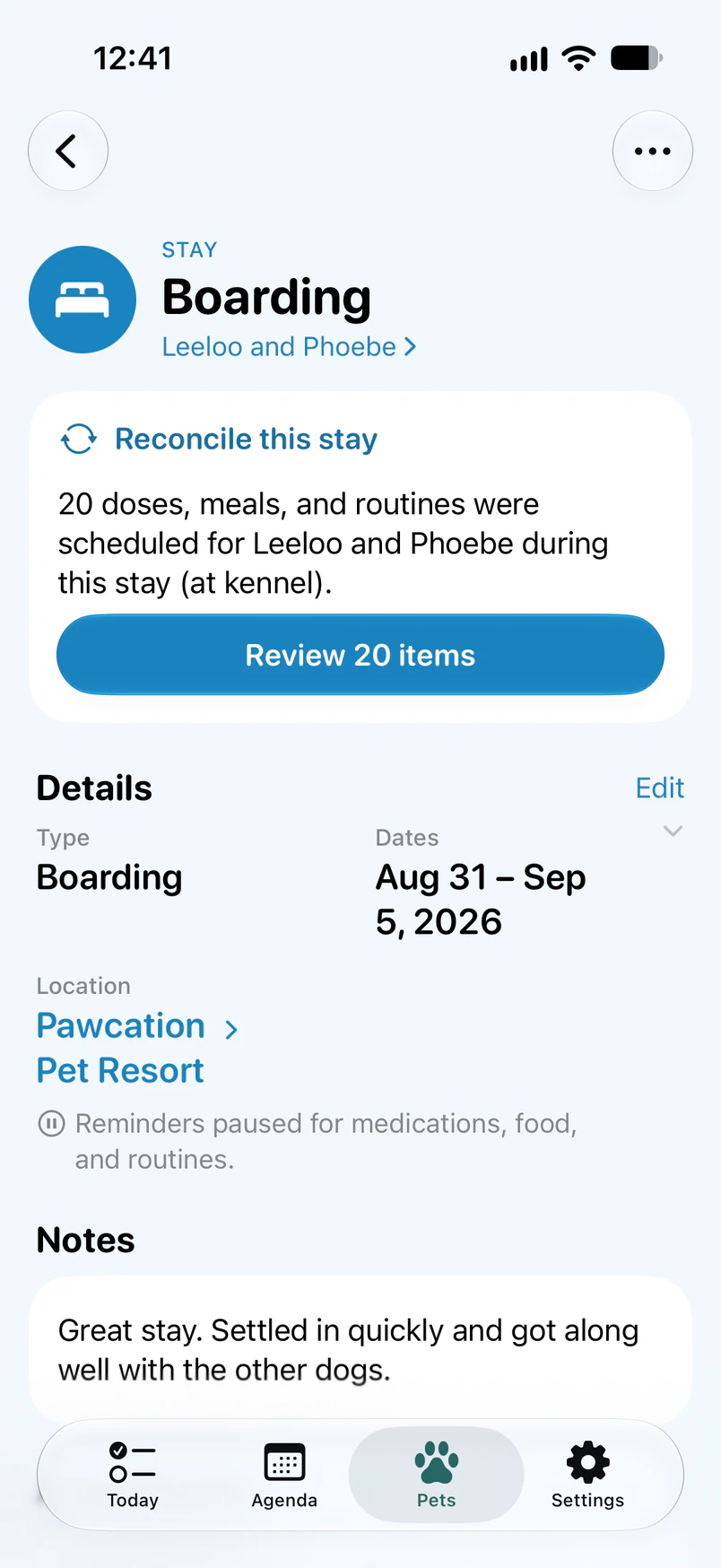
Ask the sitter to log every dose with the time and their initials, plus anything unusual: a skipped meal, vomiting, a change in energy. When you get back, that log tells you and your vet exactly what happened. If you use a shared app schedule, you can see each dose as it’s logged and answer questions in real time.
Questions owners ask
What should the sitter do if they miss a dose?
Whatever your vet says for that medicine, written down before you leave. The FDA explains that the answer depends on the medicine and that your vet can tell you when to give the next one. If the card has no answer, the sitter should call your vet rather than guess.
What if my pet spits out the pill or vomits after it?
Again, ask your vet in advance. The FDA says the right step depends on the type of medicine. Put the answer on the card and ask the sitter to note it in the log either way.
How do I teach a sitter to give a pill or an injection?
Show them, then watch them do it. The AKC suggests you "demonstrate to your pet sitter how to dose your pet." A practical tip: book the sitter for a visit before your trip so they give at least one real dose while you're there.
Does my sitter need permission to take my pet to the vet?
Write down what you allow. The AKC suggests explaining the type of veterinary care your pet can receive if you can't be reached. Zoetis suggests a treatment authorisation form: "Leave it with your pet sitter and forward a copy to your veterinarian."
My pet has diabetes or epilepsy. What's different?
Leave your vet's own written plan, not a summary of it, plus the signs that mean an emergency and who to call. Ask your vet whether they want to see the sitter first. Practise the routine together before you go.
How much medicine should I leave?
A practical tip: enough for the whole trip plus a few spare days in case of delays, and check that no prescription runs out while you're away. Keep everything in its original labelled container.
This is general information, not veterinary advice. Ask your vet about your own pet.