 Snout
How do I manage several medications for my senior dog or cat?
Keep one master list of every medicine your pet takes, turn it into one daily timetable, and log each dose as you give it. Ask your vet, for each medicine, whether it goes with food, what to do after a missed dose and which side effects to watch for. Bring the list and the log to every visit so your vet can check the whole picture.
Published · Last reviewed

Older pets often end up on several medicines at once: one for the joints, one for the heart, one for the kidneys, plus a supplement. Each one is simple. The hard part is keeping them all straight, every day, for months. Your vet decides what your pet takes and how much. Your job is to give it the same way every day and keep a clear record.
Start with one master list
Write every medicine your pet takes on one list, including supplements, flea and worm treatments and anything prescribed by a specialist. The FDA suggests asking your vet “Could this medicine interact with other medicines my pet is taking?”, and a complete list is what lets them answer. For each medicine, write down:
- the name and strength, and what the tablet or liquid looks like,
- what it is for and how long it should be given,
- how it is given and at what times, as your vet prescribed,
- whether it goes with food or on an empty stomach,
- what to do if a dose is missed, vomited or spat out,
- which side effects to watch for.
The FDA’s list of questions for your vet covers most of these, so it is a good checklist to take to the appointment. Keep each medicine in its original labelled container too. The FDA’s storage advice is to “Keep pet medications in their original containers with intact labels” and to store them away from people medicines to prevent a mix-up.
Turn it into one daily timetable
Once you know each medicine’s rules, build one timetable for the day. Food matters here: the FDA notes that “Some oral medicines work better when given with food” while others need an empty stomach. Ask your vet which medicines can share a time and which need to stay apart.
Example layout only. Your vet's plan sets the medicines and the times.
| Medicine | Breakfast | Evening walk | Bedtime |
|---|---|---|---|
| Medicine Awith food | Dose box | Nothing | Dose box |
| Medicine B | Dose box | Nothing | Nothing |
| Supplement | Nothing | Dose box | Nothing |
Tick each box when the dose is given, and add your initials.
Practical tips (no veterinary source):
- Anchor each slot to something you already do every day: breakfast, the evening walk, bedtime.
- A weekly pill organiser per pet shows a missed dose at a glance. Fill it from the labelled boxes, not from memory.
- Set a phone reminder for each slot, especially for medicines given only once a day, which are the easiest to forget.
- Write the timetable on one page and keep it where the medicines live, so anyone helping can follow it.
What to record every day
A dose log turns “I think I gave it” into a fact. Each line needs the medicine, the time it was given and who gave it. Add anything that didn’t go to plan: a refused pill, a late dose, a vomited meal.
Then add what you notice about your pet. Cornell’s Feline Health Center calls close observation “one of the most important tools you have” with a senior cat, and the same habit helps with an older dog. Note changes in appetite, thirst, sleep, stools, coordination or mood, with the date. When a medicine starts or changes, those notes are how you and your vet spot a side effect. The free medication log prints with columns for all of this.
Missed, late or refused doses
There is no single rule that fits every medicine. For a missed dose, the FDA’s answer is “Again, it depends on the medicine”, and your vet can tell you when to give the next one. For a pill that comes back up, the FDA says your vet “will guide you on what to do based on the type of medicine”. Ask for both answers when the medicine is prescribed and write them on your master list, so you are not guessing at night.
If you think a dose was given twice, call your vet right away. A shared log, filled in the moment each dose is given, prevents most double doses in a busy household.

Bring the whole picture to every visit
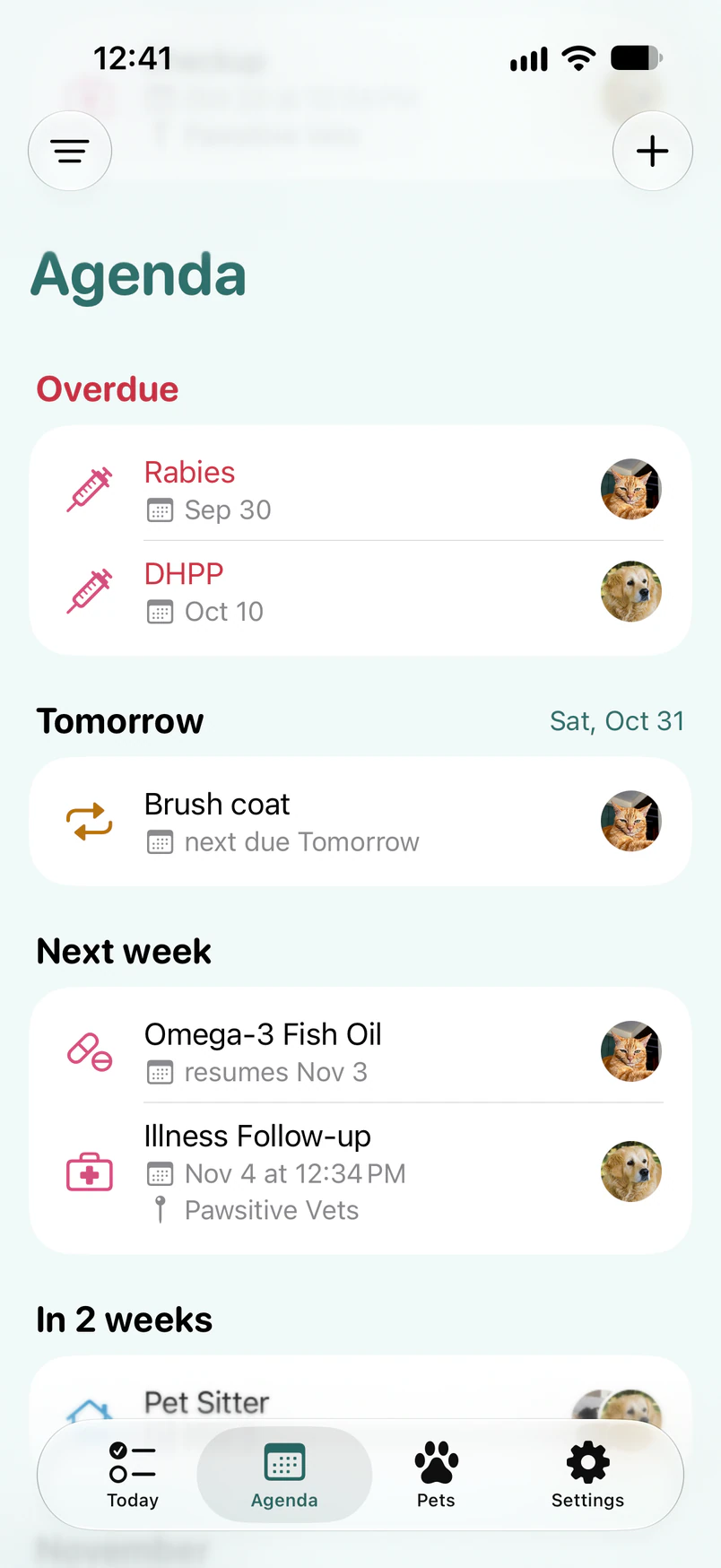
Take the master list and the dose log to every appointment, including visits to a specialist. Ask your vet to read through the list, confirm each medicine is still needed, and update the timetable if anything changes. A printed summary saves you trying to remember dates and doses in the consulting room.
Questions owners ask
Can I give all the pills at the same time?
Ask your vet. The FDA notes that some oral medicines work better with food and others need an empty stomach, and that medicines can interact with each other. Your vet can tell you which ones can share a time slot and which need to stay apart.
What if I miss a dose or give it late?
It depends on the medicine. The FDA says your veterinarian will be able to tell you when to give the next one. Ask for that answer for each medicine before it happens, write it on your master list, and don't give an extra dose to catch up without asking first.
My pet spat out a pill or vomited after it. Should I give another?
Not without asking. The FDA explains that the right answer depends on the type of medicine, and your vet will guide you. Log what happened, with the time, so you can tell them exactly.
How do I know if a new symptom is a side effect or just old age?
You often can't tell on your own, and that is why it's worth logging. Cornell's Feline Health Center warns never to assume that changes in an older cat are simply due to old age. Write down the change and the date, compare it with when a medicine started or changed, and call your vet.
What should I do if I think I gave too much?
Call your vet right away. That is the FDA's advice for any accidental extra dose. Your dose log tells them what was given and when.
Does my vet need to know about supplements and other vets' prescriptions?
Yes. The FDA suggests telling your vet about every other medicine so they can check for interactions. Put supplements, flea and worm treatments and anything a specialist prescribed on the same master list.
This is general information, not veterinary advice. Ask your vet about your own pet.