 Snout
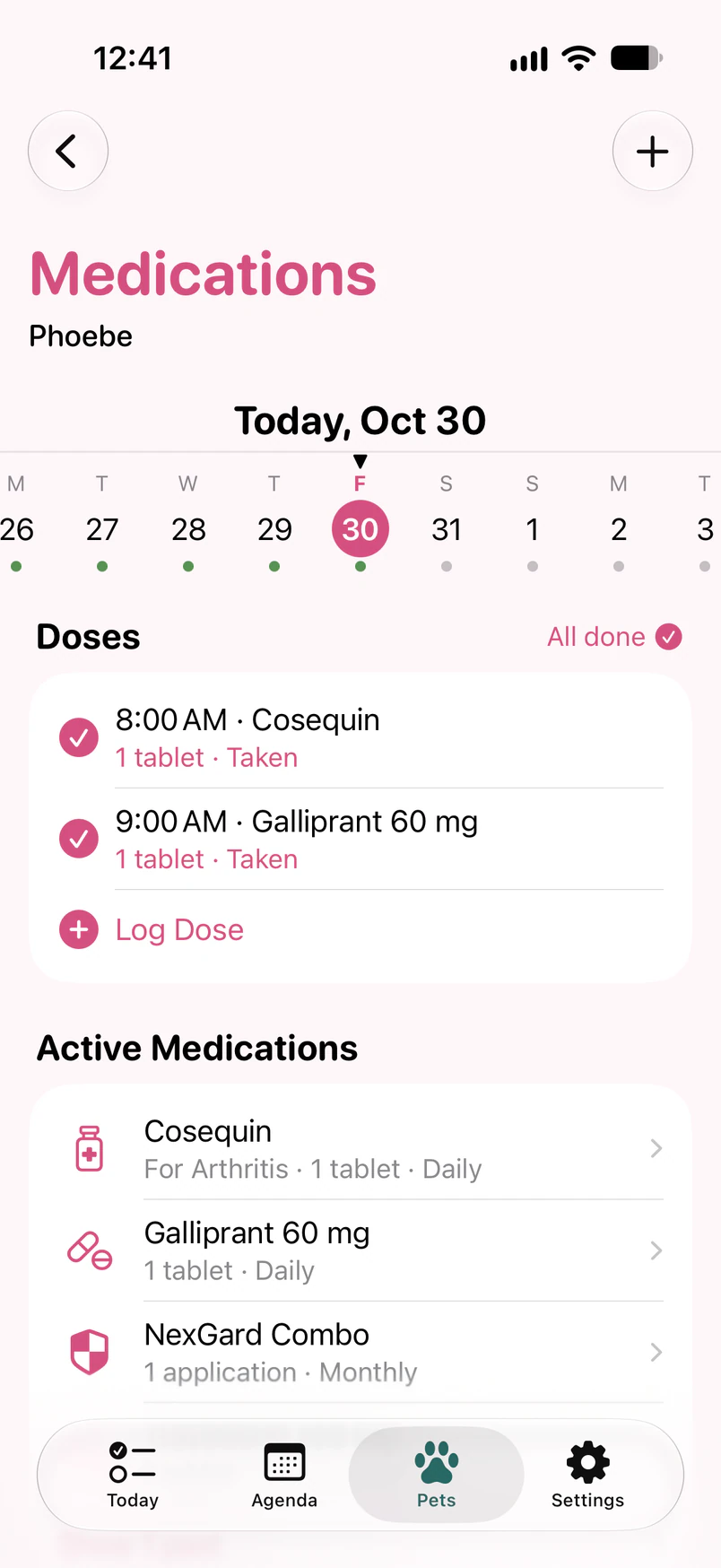
How do I keep track of my dog's allergy medication and itching?
Log each dose as you give it, give your dog's itch a quick score every day, and note flare-ups with the date and what might have triggered them. That record shows your vet whether the treatment is working and when itch comes back. Doses, timing and which medicine to use are your vet's call, so don't change them on your own.
Published · Last reviewed

Allergic itch rarely has a one-week fix. Merck calls atopic dermatitis a lifelong disease that needs long-term management, and flea allergy and food allergy can join in or look similar. Treatment is often trial and adjustment, and the most useful thing you can bring to each vet visit is a clear record: what was given, how itchy your dog was, and when things changed.

A daily itch score
Itch is hard to describe from memory (“she’s been scratching a lot”). A small daily score is easier to compare. In the Apoquel label’s field studies, owners rated their dog’s itch every day on a 10 cm scale, and that owner score was how treatment success was measured. You don’t need the exact scale at home.
Practical tips (no veterinary source):
- Score itch once a day at the same time, from 0 (no scratching) to 10 (scratching, licking or chewing most of the time you watch).
- Note where: paws, ears, face, belly, back near the tail.
- Take a photo of the worst patch once a week in the same light. It shows change better than words.
What else to write down
Alongside the score, a useful line has:
- Medicine: what was given, when, and who gave it, including shampoos, ear drops and flea treatment.
- Missed or late doses, so a flare a day or two later makes sense.
- Flare-ups: the date, the body area and any likely trigger (a walk in long grass, a new food or treat, a missed flea treatment, the start of pollen season).
- Ears and skin: head shaking, smelly ears, red or crusty skin. Merck notes that long-term or recurrent ear infections may be the only sign in some dogs, and Cornell’s Riney Center says allergies can lead to bacterial and yeast skin infections.
- Food: if your dog is on an elimination diet, everything eaten, treats included.
To keep doses and notes on one printed page, try the free medication log.
Flea allergy, atopy or food?
The cause shapes the treatment, so it is worth knowing which your vet suspects. Merck describes:
- Atopic dermatitis (environmental allergies; Cornell’s Riney Center mentions pollens and mould spores): itch that most often affects the feet, face, ears, front legs and belly, with paw licking and face rubbing.
- Flea allergy dermatitis: an allergy to flea saliva, classically crusted, itchy skin over the hips, base of the tail and thighs. Merck notes it is unusual in dogs under one year old. Parting the fur slowly often shows flea dirt, which turns reddish brown on a damp paper towel.
- Food allergy: less common than airborne allergies. Merck says blood and skin tests are not reliable for it; it is diagnosed with a strict elimination diet trial, where only new ingredients are fed.
Your log helps here too: itch centred on the base of the tail, or itch that follows a missed flea treatment, is a clue worth showing your vet.
Medicines and what to expect
Cornell’s Riney Center lists the main options: antihistamines for mild itch, corticosteroids for more severe itch, Apoquel (an oral medicine), Cytopoint (an injectable antibody that reduces itching), allergy shots, and shampoos, rinses, wipes and mousses. Merck adds that treatments for sudden flare-ups often differ from those for long-term control, and that most veterinary dermatologists prefer immunotherapy, given as injections or drops, though improvement may not be visible for many months.
Each medicine has its own label, side effects and rules. The Apoquel label, for example, says it is for dogs at least 12 months old, can be given with or without food, and that dogs on it should be monitored for signs of infection. Which medicine, how much and how often is your vet’s decision. Ask for the plan in writing, including what to do after a missed dose.
Questions owners ask
How quickly does allergy medicine work?
It depends on the medicine. In the Apoquel label's field study, owners scored itch daily and itch scores were lower than placebo from the first days of treatment. Cornell's Riney Center notes that a single Cytopoint injection can sometimes work for several weeks. Merck says allergy shots (immunotherapy) may take many months before you can tell whether they are working. Ask your vet what to expect from yours.
What if I miss a dose?
Ask your vet, ideally before it happens, and write the answer next to the schedule. Don't double up to catch up unless your vet tells you to. Then note the missed dose in your log: if itch flares a day or two later, that note explains it.
Is it a flea allergy or atopic dermatitis?
Your vet will work that out, and a dog can have both. Merck describes flea allergy as a reaction to flea saliva, with crusted, itchy skin over the hips, base of the tail and thighs. Atopic dermatitis more often affects the feet, face, ears, front legs and belly, with paw licking and face rubbing. Cornell's Riney Center says a flea preventive will probably be recommended if your dog isn't on one.
What side effects should I watch for?
That depends on the medicine, so ask your vet and read the leaflet. The Apoquel label, for example, lists lethargy, vomiting and diarrhoea among reported reactions and says dogs on it should be watched for signs of infection. Cornell's Riney Center notes steroids can have unwanted side effects over time. Log anything new with the date it started.
Will my dog need allergy medicine forever?
Often, in some form. Merck calls atopic dermatitis a lifelong disease that needs long-term management and regular vet checks, and says many animals may still need anti-itch medicine during seasonal flare-ups. A year of logs shows which months are worst, which helps your vet plan ahead.
Are there other options besides tablets?
Yes. Cornell's Riney Center lists antihistamines for mild itch, steroids for more severe itch, Apoquel tablets, Cytopoint injections, allergy shots and medicated shampoos, wipes and mousses. Merck adds that most veterinary dermatologists prefer immunotherapy and that food allergies are diagnosed with an elimination diet trial. Your vet decides which fits your dog.
This is general information, not veterinary advice. Ask your vet about your own pet.