 Snout
How do I care for my dog or cat after surgery?
Follow your vet's discharge instructions: they set the medicines, the cone, the rest period and the recheck for your pet's surgery. Give pain medicine exactly as directed, check the incision every day and keep your pet from licking it. Call your vet about increasing redness, swelling, discharge or an opening incision, ongoing vomiting or poor appetite, or pain that gets worse.
Published · Last reviewed
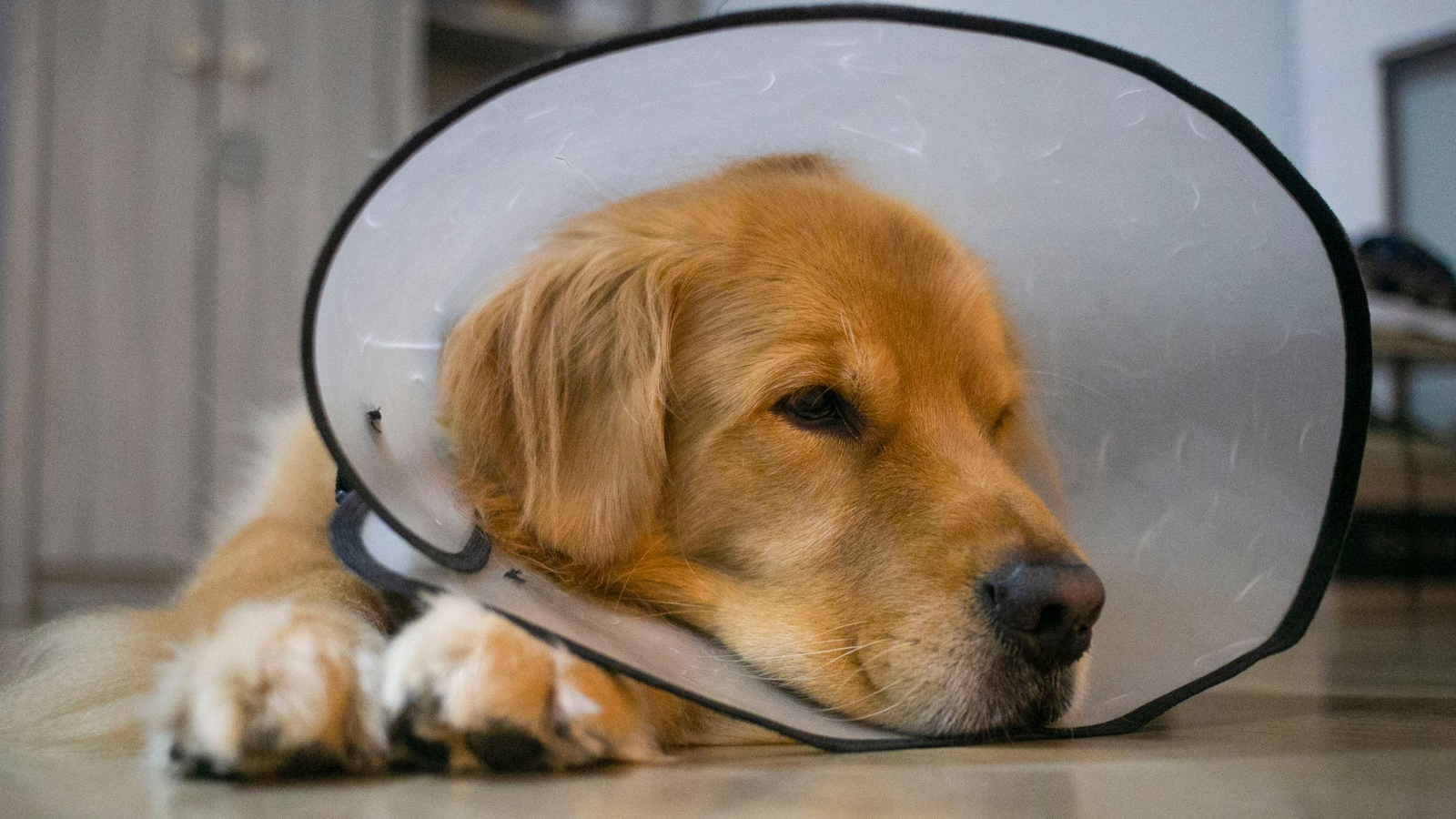
Bringing your pet home after surgery is a relief and a worry at the same time. Your vet has done the hard part. The days at home decide how smoothly healing goes, and most of that comes down to three things: medicines on time, a protected incision, and rest.
Every surgery is different. Texas A&M’s vet school puts it simply: “Every type of surgery will have different post-operative care instructions.” Your vet’s discharge sheet is the plan, and it wins over anything general, including this page.
Start with the discharge sheet
Before you leave the clinic, make sure the discharge sheet answers these questions. If it doesn’t, ask.
- Which medicines, how and when to give them, and with food or not.
- How long the cone, bodysuit or bandage stays on.
- How much activity is allowed, and for how long.
- When baths, walks and normal play can resume.
- When the recheck or stitch removal is, and who to call out of hours.
Practical tips (no veterinary source): photograph the sheet, keep the paper by the medicines, and prepare a quiet, confined space at home before you bring your pet back.
What to record each day
A short daily log helps you notice slow changes, and gives your vet facts if you need to call. Practical tips (no veterinary source), one line per day with:
- Medicines: each dose, the time and who gave it. ACVS says “Pain medications should be given exactly as directed”, so log them the moment they’re given.
- Food and water: how much was eaten and drunk.
- Toilet: urinating and stools, and any straining.
- Energy and pain: resting comfortably, restless, crying, reluctant to move.
- The incision: a quick note, plus a photo in the same light each day.
The free medication log prints with columns for the medicines; add a line for the incision.
Checking the incision
ACVS describes a healing incision as “typically clean and dry, with the edges closed and minimal swelling.” Look at it once or twice a day without touching it.
What should make you call is change in the wrong direction. Texas A&M lists “redness or swelling that is getting worse” as signs of infection, and ACVS lists “increasing redness, swelling, heat, discharge, odor, or opening of the incision.” Compare today’s photo with yesterday’s.
ACVS also notes that external stitches or staples “should only be removed by a veterinary professional”. Don’t trim or pull them yourself.
The cone, rest and baths
The cone (or a T-shirt, sock or bandage, which Texas A&M lists as alternatives depending on the site) exists for one reason: ACVS says “Licking or chewing at an incision can delay healing and increase the risk of infection.” Keep it on for as long as your vet says, even when your pet seems fine.
Rest is just as important. ACVS says running, jumping, playing and stairs should be limited as directed by your veterinary team, and Texas A&M notes that the rest period “depends entirely on the procedure.” For baths and swimming, ACVS says to wait “until healing is complete and clearance is given.”
Practical tips (no veterinary source): block stairs and favourite jumping spots, use a lead even in the garden if your vet restricted activity, and give quiet distractions such as chews or food puzzles if your vet allows them.
Eating after surgery
A smaller appetite at first is common. ACVS says “It is normal for your pet to eat less than usual or skip a meal during the first 24 hours after surgery,” and Texas A&M says “some pets may not have their full appetite back for two or three days.” The two sources describe different time frames, so follow what your vet told you to expect for this surgery.
If some medicines must be given with food, ask your vet what to do on a day your pet won’t eat. Log every meal so you can tell your vet exactly how much was eaten.
Questions owners ask
How long does my pet need to wear the cone?
As long as your vet's discharge sheet says. There is no single answer: Texas A&M notes that care instructions differ for every type of surgery. The cone is there because, as the American College of Veterinary Surgeons (ACVS) puts it, licking or chewing at an incision can delay healing and increase the risk of infection.
My pet won't eat after surgery. Is that normal?
Often, at first. ACVS says it is normal to eat less or skip a meal during the first 24 hours, and Texas A&M says some pets may not have their full appetite back for two or three days. Call your vet if poor appetite goes on longer than expected, or comes with vomiting or lethargy.
What should a healing incision look like?
ACVS describes it as typically "clean and dry, with the edges closed and minimal swelling." Call your vet about increasing redness, swelling, heat, discharge, smell, or any opening.
Can I give the pain medicine only when my pet seems sore?
Ask your vet first. ACVS says pain medications should be given exactly as directed, so a pet that seems comfortable still gets its scheduled dose unless your vet says otherwise. Log each one so nothing is missed or doubled.
When can my dog go for walks again, or my cat go outside?
When your vet says so. Texas A&M notes that the rest period depends entirely on the procedure. ACVS lists running, jumping, playing and stairs as things to limit as directed by your veterinary team.
When can I bathe my pet?
ACVS says bathing or swimming should be avoided until healing is complete and your vet gives clearance. External stitches or staples should only be removed by a veterinary professional.
This is general information, not veterinary advice. Ask your vet about your own pet.